Overview / How it works
From results to a ranked shortlist.
Zim Student Pathfinder reads a student's results, checks them against every approved programme and scholarship, and returns what they qualify for now — plus the exact grade that would unlock the next option.
The product
From a term's results to a ranked list of what's next.
Pathfinder works from the grades a school already holds. Each student gets a ranked list: what they qualify for today, what they are close to, and the specific grade that would close the gap.

What a match contains
A verdict, the evidence, and the next grade.
Pathfinder writes each result as a short record: what a student qualifies for now, why, and what would move the next opportunity within reach.
Verdict
Qualified, close, or not yet — stated plainly at the top of every match.
Requirements
Which eligibility rules were met, and the result that satisfied each one.
Access gap
The exact subject and grade still missing, where a qualification is within reach.
Deadline
The application date, read from the opportunity record and kept current.
No sample matches are shown. Sign in to see a student's own record.
How it works
Three simple steps.
Add your results, we check them against every approved programme and scholarship, and you get a shortlist that shows exactly what is still missing.

Results in
A teacher submits a student's O-Level or A-Level grades, term by term.
Matching engine
Eligibility rules and ranking logic check those results against programmes and scholarships.
Matched opportunities
A ranked list comes back: what the student qualifies for now, and what would close the gap.
The access gap
Potential should not depend on a postcode or a personal device.
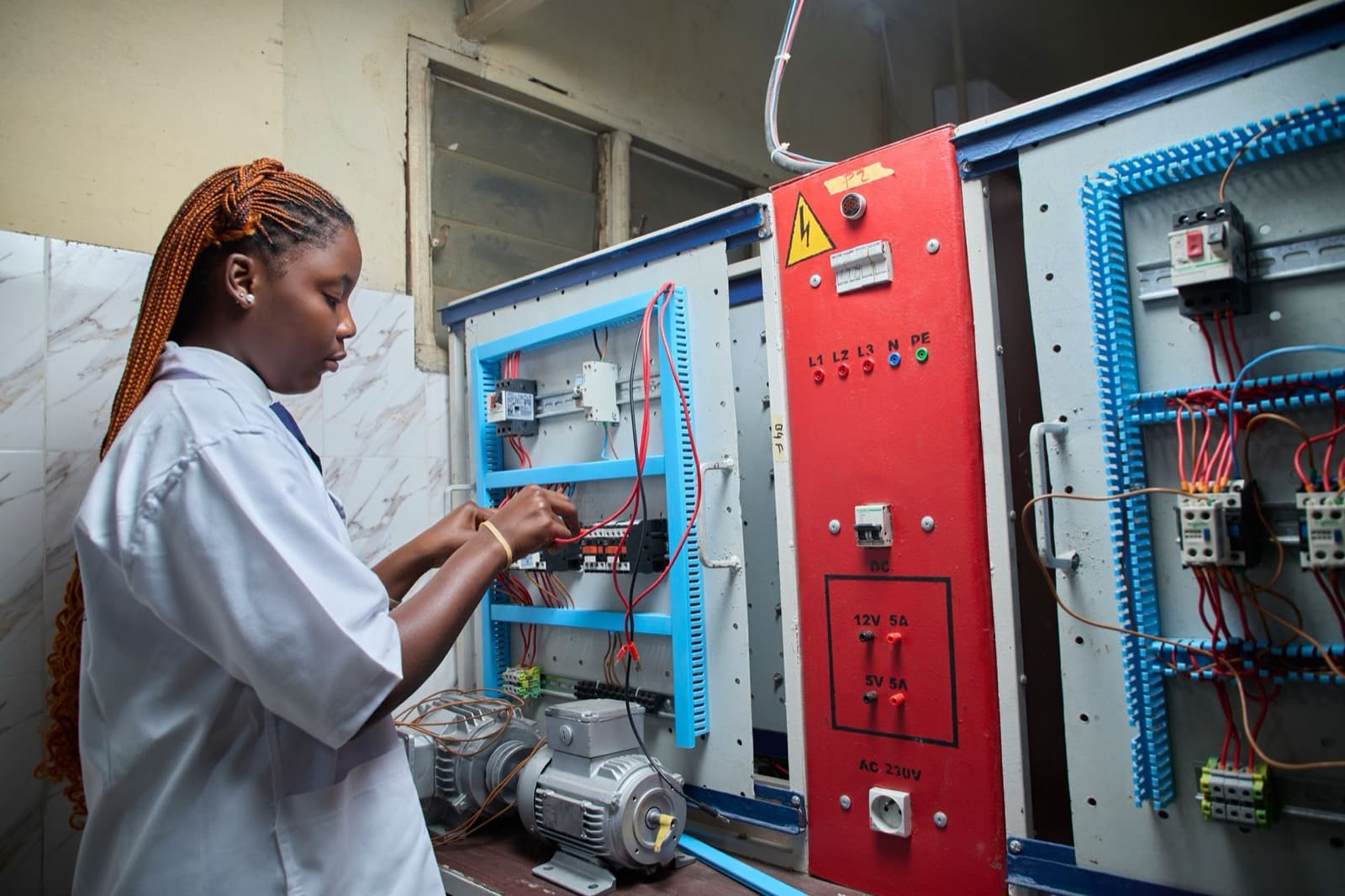
Many learners study without their own computer or affordable data. A tool that assumes every student applies from a personal device leaves out the students it should help most.
The device divide
Many Zimbabwean students study without their own computer or affordable data. A tool that assumes every learner applies from a personal device leaves out the students it should help most.
The school is the access point
A teacher submits results once each term, and the ranked matches come back to be shared with students. No personal device, no data bundle and no cost to the learner.